

AbbVie Reports Slow Growth for Botox

Innovative Eyelid Treatment Provides a New Solution for Patients
Sponsored by RVL Pharmaceuticals
RVL Pharmaceuticals (Bridgewater, N.J.) has established a leading presence in medical aesthetics with Upneeq, its FDA-approved prescription eye drop for acquired blepharoptosis in adults. The company is focusing on provider education and patient access while expanding its portfolio into eye-area skincare. Amy Shah, RVL's Chief Growth Officer, discussed the company's strategy and its plans for future growth.
Upneeq represents a new pharmacologic approach to treating acquired blepharoptosis, with clinical studies demonstrating improvements in eyelid elevation and superior visual field. How has this scientific foundation influenced RVL's strategy for establishing and expanding the treatment category in medical aesthetics?

We saw a real market opportunity to address an unmet need for adults with low-lying eyelids, also known as acquired blepharoptosis. At RVL, we've always focused on understanding what patients need and finding innovative solutions that make a meaningful difference in their lives, especially when it comes to the eyes. With Upneeq® (oxymetazoline hydrochloride ophthalmic solution), 0.1%, a once-daily prescription eye drop for low-lying eyelids, we recognized an opportunity not only to introduce a new, clinically backed treatment option, but also to raise awareness of a condition many adults may not realize they have, or know it is treatable.
That’s really been at the heart of our strategy. We want to educate both healthcare providers and consumers, help people better understand their options, and ultimately make treatment more accessible to appropriate patients. As we continue to grow the category, it’s about more than introducing a product. It’s about building awareness, establishing trust, and making Upneeq a treatment option that patients and providers can feel confident in.
Acquired blepharoptosis can affect both visual function and appearance, yet recognition and appropriate diagnosis remain important challenges. How is RVL working with dermatologists, plastic surgeons and other aesthetics providers to improve understanding of the condition and identify appropriate treatment candidates?
Our focus is on meeting healthcare providers where they are. Many dermatologists, plastic surgeons, and other aesthetics providers already know about acquired blepharoptosis, so the focus is on building awareness of Upneeq and helping them understand how it fits into their treatment offerings and where it is best served throughout a patient's own journey.
Ultimately, our goal is to help providers get to know the brand, understand the clinical science, and improve access so when they do consider the treatment, they feel confident identifying appropriate patients and having informed conversations about their treatment options. Samples have also proven to be helpful on the education journey for both providers and patients.
Recent clinical literature has highlighted the importance of recognizing and managing eyelid ptosis in aesthetic dermatology. Where do you see the greatest opportunities for integrating Upneeq into existing aesthetic treatment practices, and what factors are driving provider adoption?
What makes Upneeq so unique is that it offers an FDA-approved, non-surgical treatment option for adults with acquired blepharoptosis. As we age, changes in the muscle that helps elevate our eyelids can contribute to low-lying eyelids. With growing interest in anti-aging and aesthetic treatments, we see a real opportunity to educate providers and patients about non-invasive options that can help create a more open, awake-looking appearance. For us, it’s about building awareness and helping providers understand how Upneeq can complement their existing offerings, particularly as patients look for non-surgical options to address age-related concerns. We believe the combination of clinical science, convenience, and continued provider education will help drive continued adoption.
Clinical research has documented relatively rapid improvements in eyelid elevation following oxymetazoline administration. How do treatment convenience, patient expectations and real-world patient experiences influence RVL's approach to consumer education and long-term engagement?
Treatment convenience, patient expectations, and real-world experiences really influence everything we do. At the end of the day, we want patients to have a positive experience, feel confident in their treatment choice, and believe in the value of continued compliant use. We know our patients lead busy lives, so access is incredibly important. With Upneeq, patients have a once-daily treatment option that can start to work in as little as five minutes, with effects lasting up to eight hours.
“We know consumers want products that deliver results while fitting easily into their everyday routines, so we wanted to offer another way to care for the eye area.”
For us, it’s about making education simple and accessible. We shape content plans by observing online engagements, thorough social listening, and having conversations with real HCPs and patients to build that trust. It's also important for us to share patient voices with others, so the product becomes a treatment option that appropriate patients recognize and incorporate into their everyday routines.
RVL is developing a commercial model combining physician-based distribution, direct-to-consumer marketing, independent telehealth access and prescription fulfillment. How are these channels working together to expand patient access while maintaining meaningful relationships with aesthetic providers?
At RVL, our goal has always been to make it easier for appropriate patients to learn about and access Upneeq, while continuing to build strong relationships with healthcare providers. We know that every patient’s journey looks different, so it’s important that we meet people where they are. That’s really what our approach is all about. Through our direct-to-consumer marketing, we’re building awareness and helping people better understand their treatment options that they can discuss with a healthcare provider. At the same time, we’re working closely with healthcare providers to ensure they have the education and resources needed to have informed conversations with their patients in their offices or during telehealth appointments.
And with access to independent telehealth and prescription fulfillment, we see an opportunity to make the process more convenient for patients who may prefer those options. For us, these channels aren't competing with one another. They're working together to create a more connected patient experience, with healthcare providers remaining an important part of the process and dialogue. Ultimately, it's about removing barriers to access, building trust, and making sure patients have the information and support they need readily available throughout their treatment journey.
With the introduction of Reveal Under Eye Complex, RVL has expanded into skincare products addressing the periocular region. What consumer insights are informing the company's portfolio strategy, and where do you see opportunities for further innovation?
We’ve always believed the eyes are one of the face's most expressive features. As we continue to grow, we saw a natural opportunity to build our expertise and expand beyond pharmaceuticals and into skincare. That’s really what led us to launch Reveal Under Eye Complex, a cosmetic under-eye product designed to help brighten, firm, and smooth the skin. We know consumers want products that deliver results while fitting easily into their everyday routines, so we wanted to offer another way to care for the eye area. For us, it’s about continuing to understand what consumers are looking for and finding new ways to innovate and expand our offerings around the eyes.
As medical aesthetics increasingly incorporates minimally invasive treatments, prescription products and consumer-directed care, what do you see as the most important opportunities for RVL's growth over the next several years?
We’re incredibly proud of what we’ve accomplished so far, but we know there’s still so much opportunity ahead. A big part of that is reaching more people who may not realize there’s a non-surgical treatment option for adults with low-lying eyelids that can help create a more open, awake-looking appearance.
At the same time, we want to continue understanding our consumers, their needs and what shapes their everyday routines. Those insights will help shape how we grow, from reaching new audiences and improving access to finding new ways to innovate around the eyes. Ultimately, we want to continue building on the trust we've established and finding new ways to innovate, educate, and make RVL a resource that both patients and providers can turn to for eye-area solutions.
About Upneeq®
Upneeq® (oxymetazoline hydrochloride ophthalmic solution), 0.1% is a prescription eyedrop used to treat acquired blepharoptosis (low-lying lids) in adults.
Warnings and Precautions:
Low-lying lids may be related to conditions such as stroke and/or brain aneurysm, Horner syndrome, myasthenia gravis, loss of the ability to move eye muscles, eye infection and eye tumors. Tell your doctor if you have any of these conditions.
UPNEEQ is a type of medication that may affect your blood pressure. If you have heart disease, uncontrolled high or low blood pressure, or feel faint at rest or when quickly standing up, you should call your doctor if your symptoms get worse.
Patients with reduced blood flow to the brain or heart, or patients who experience eye or mouth dryness due to an immune system disorder (Sjögren’s syndrome), should use care when taking UPNEEQ. Call your doctor immediately if you feel your symptoms may be getting worse.
UPNEEQ may increase the risk of eye pressure due to fluid buildup (angle-closure glaucoma) in patients with untreated narrow-angle glaucoma. Call your doctor immediately if you feel increased pressure in your eye after using UPNEEQ.
Do not let the tip of the UPNEEQ vial touch your eye or any other surface. This can help prevent eye injury or contamination. Each UPNEEQ vial is for one-time use and should be discarded after being used.
Adverse Reactions
In clinical trials, the most common adverse reactions with UPNEEQ (occurring in 1–5% of patients) were eye inflammation, eye redness, dry eye, blurred vision, eye pain at time of use, eye irritation, and headache.
This is a summary of the most important safety information for UPNEEQ. For more in-depth safety information, please review the full Prescribing Information for UPNEEQ.
About RVL Pharmaceuticals
RVL Pharmaceuticals operates a digitally enabled, vertically integrated commercial platform that combines consumer demand generation, healthcare provider engagement, telemedicine, pharmacy fulfillment, and data-driven insights to create seamless experiences for both patients and healthcare professionals.
Its lead product, Upneeq®, a once-daily prescription eyedrop, provides a non-surgical eyelift for adults with acquired ptosis. Upneeq® activates a muscle in the eyelids, lifting the lid for a more open and awake appearance. One drop daily to each affected eye works in minutes and can last up to eight hours.
The company recently expanded its platform with the introduction of Reveal™ Under Eye Complex, reinforcing RVL's commitment to innovation across eye aesthetics and ocular wellness.
For more information, please visit www.rvlpharma.com.
Please feel free to contact us directly at: info@miinews.com
© 2026 Medical Insight, Inc.

Neurotoxins Lead Q3 Aesthetics Gains as Device Results Diverge
Medical aesthetics companies reported uneven growth in Q3-2026. Neurotoxins continued to lift injectable sales even as demand for traditional dermal fillers remained soft. Dermatological skincare held up well, with double-digit sales gains at several public companies. Results for energy-based device (EBD) makers varied widely, with little sign of a broad rebound in equipment sales.
AbbVie Inc., North Chicago, Ill. [NYSE: ABBV], reported third quarter Allergan Aesthetics global net revenues of $1.176B, down 1.4% year-over-year (YOY) on a reported basis and 1.8% operationally. BOTOX Cosmetic net revenues reached $669M, up 4.9% reported and 4.1% operationally. Unlike in Q2-2026, U.S. neurotoxin sales grew, rising 2.4% to $388M, while international sales rose 8.6% to $281M. Juvéderm net revenues fell 11.9% reported and 11.8% operationally to $222M, with declines in both the U.S. and international markets. Its worldwide reported decline was nearly twice the 6.0% recorded in Q2-2026.

Jeffrey Stewart, AbbVie’s executive vice president and chief commercial officer, pointed to early signs of stabilization in the aesthetics market on the company’s Q3-2026 earnings call. “While economic uncertainty and lower consumer confidence have pressured the aesthetics category over the last several quarters, we are starting to see signs of stability.”
Galderma Group AG, Zug, Switzerland [SWX: GALD], reported Q3-2026 Injectable Aesthetics net sales of $736M, up 15.4% YOY at constant currency. Neurotoxin sales rose 24.1% to $433M, helped by the reversal of U.S. sales timing effects that had weighed on Q2-2026. Dysport continued to grow across major markets, and Relfydess gained traction in Europe and APAC. Fillers and biostimulators rose 4.8% to $303M, slower than the 7.6% recorded in the second quarter. Galderma reported continued double-digit Sculptra growth in both the U.S. and international markets for the first nine-months, even as the broader filler market remained soft. Some U.S. toxin sales shifted from Q2 into Q3, so the full 24.1% gain should not be read as a corresponding rise in demand.
Quarterly Dermatological Skincare net sales increased 15.6% at constant currency to $396M. Alastin grew at double-digit rates in the U.S. and internationally over the first nine-months. Galderma’s planned acquisition of ZO Skin Health would add another physician-dispensed brand, with closing expected in Q4-2026 or early 2027. “ZO’s daily regimen and targeted prevent and correct portfolio complements Alastin’s offering, more focused on pure procedure skincare,” CEO Flemming Ørnskov said on the trading update call.
Company-wide sales reached $1.632B for the quarter, up 26.0% at constant currency, with Therapeutic Dermatology contributing substantially to the gain. Galderma raised its full-year net sales growth outlook to 22.5% to 23.5%, from 19% to 21%, and maintained its core EBITDA margin outlook of approximately 26%, both at constant currency. The guidance excludes ZO Skin Health. The company is targeting Q1-2027 to resubmit its U.S. application for relabotulinumtoxinA, subject to further FDA feedback.
Evolus Inc., Newport Beach, Calif. [NASDAQ: EOLS], reported net revenues of $78.0M, up 13% YOY. Global toxin revenue grew about 11% to $70.1M, while sales of its injectable hyaluronic acid (HA) gels rose nearly 40% to $7.9M. Evolus posted a GAAP operating loss of $8.4M, but adjusted EBITDA improved by $4.2M YOY to $1.2M, its fourth consecutive positive quarter on that measure. The company’s HA fillers accounted for approximately one-tenth of sales but contributed roughly a quarter of the YOY revenue increase. They are becoming more meaningful to growth, even as neurotoxins still account for most of the business.
The company maintained full-year revenue guidance of $330M to $337M. “We are operating in a healthy global aesthetics market with consumers continuing to prioritize beauty and their appearance despite softer consumer confidence,” President and CEO David Moatazedi said on the earnings call.

Hugel Co., Ltd., Chuncheon-si, South Korea [145020: KQ], reported consolidated Q3 net sales of ₩97.5B, down 7.9% YOY. Operating profit fell 61.8% to ₩18.1B, and net profit was ₩4.7B. Nine-month sales remained up 15% at ₩352.1B. Quarterly toxin sales fell 21% to ₩47.2B, while HA fillers and skin boosters rose 2% to ₩30.9B. The slowdown came despite a 54% increase in combined domestic sales of those injectables. Hugel said the shift to a contract sales organization in the U.S. affected near-term results, while Brazil delivered record quarterly sales following its market re-entry a year earlier. The contrast with South Korea and Brazil makes the companywide decline a poor proxy for demand across Hugel’s markets.
Daewoong Pharmaceutical Co., Ltd., Seoul, South Korea [069620.KS], reported consolidated revenue of approximately ₩459.4B, up 11.6% YOY, and operating profit of ₩71.3B, up around 25%. Nabota sales reached ₩116.3B, exceeding ₩100B for a second consecutive quarter. Exports rose 127.9% to ₩106.8B and accounted for roughly 92% of the toxin’s sales. The increase helped lift profitability as Nabota represented a larger share of the company’s sales.
MedyTox Inc., Seoul, South Korea [086900: KQ], reported consolidated revenue of ₩59.3B, down 2.8% YOY. Operating profit climbed 74.5% to ₩15.5B and net profit increased 61.4% to ₩11.6B as costs fell. Neurotoxin sales totaled ₩35.5B, with overseas toxin sales up 17% as MedyTox expanded sales of Meditoxin and Newlux. The company attributed a decline in HA filler sales to a reorganization of its global distribution and said its fat-reduction injectable Nuviju reached its annual domestic sales target ahead of schedule. The improved profitability did not depend on a rebound in sales. Operating margin rose to about 26% from about 15% a year earlier.
Huons Global, Seongnam, South Korea [084110: KQ], reported consolidated revenue of ₩214.8B, up 1.7% YOY, while operating profit fell 53.9% to ₩9.4B. Toxin subsidiary Huons BioPharma generated ₩10.4B in revenue, up 32.8% from Q2-2026 as shipments to China picked up. Separately listed Humedix [200670: KQ], the group’s aesthetics subsidiary, posted revenue of ₩50.2B and operating profit of ₩10.0B, up 22.8% and 11.3%, respectively. Increased domestic sales of aesthetic products and higher orders for over-the-counter eye drops contributed to the gain.
The subsidiaries’ gains ran counter to the sharp decline in group operating profit. The sequential jump at BioPharma is an early read on shipments to China, not a measure of how much toxin clinics there used.
Imeik Technology Development Co., Ltd., Beijing, China [SHE: 300896], recorded Q3-2026 revenue of CNY528.3M, down 6.6% YOY, and net profit attributable to shareholders of CNY197.7M, down 34.9%. The revenue decline narrowed from 8.5% in Q2, but the drop in profit deepened. Nine-month revenue fell 6.5% to CNY1.744B.
Weakness was also evident at Huadong Medicine Co., Ltd., Hangzhou, China [SHE: 000963], whose aesthetics business includes Sinclair. The company reported nine-month aesthetics revenue of CNY906M after intercompany eliminations, down 42.2% YOY. Domestic revenue fell 54.2%, while the overseas business declined 31.6%. Huadong cited tougher competition and a slower-than-expected recovery in China.
Neurotoxins continued to lift injectable sales even as demand for traditional dermal fillers remained soft.
For Huadong, the much steeper decline at home shows where the pressure was greatest, but the overseas business offered little offset. Imeik’s results point to a different problem: a smaller sales decline did not translate into better earnings.
Bloomage Biotechnology Corp., Ltd., Jinan, China [SHA: 688363], reported a 7.0% decline in consolidated quarterly revenue to CNY839.8M, while net profit attributable to shareholders rose 5.6% to CNY33.3M. It did not break out quarterly aesthetics sales in the report. In October, the company introduced a new extracellular-matrix injectable in China as it broadened its portfolio beyond HA. The launch came after quarter-end and says more about where Bloomage is investing than about how its aesthetics business performed in Q3.
PharmaResearch Co., Ltd., Gangneung-si, South Korea [KOSDAQ: 214450], reported consolidated revenue of ₩171.5B, up about 27% YOY, and operating profit of ₩62.6B. Exports in the medical-device business, which includes the Rejuran polynucleotide (PN) skin booster, rose 53% to about ₩30.0B. The company reported strong early sales in France and continued Rejuran demand in several Asian and European markets. Skincare also contributed to growth. Cosmetics sales reached ₩62.0B, with exports up 92% to ₩42.1B.
EBD manufacturers reported sharply different results in Q3-2026. Sofwave gained in both capital equipment and recurring usage fees. InMode’s sales were nearly flat, and CLASSYS’ gains outside South Korea were offset by weakness at home. Solta Medical’s acquisition of its Chinese distributor made the difference between reported growth and an organic decline. Even recurring revenue moved in opposite directions at Sofwave and InMode.
InMode Ltd., Yokneam, Israel [NASDAQ: INMD], reported revenue of $92.1M, compared with $93.2M a year earlier. Consumables and service revenue declined 3% to $19.3M, reversing the 13% gain in Q2-2026. Asia set another quarterly revenue record, while the company said U.S. and international capital equipment revenue held relatively steady compared with Q2. GAAP operating income was $17.5M and operating margin fell to 19% from 22% a year earlier, reflecting in part the cost of restructuring the North American sales team plus higher selling and marketing expenses. InMode began rolling out Morpheus8 Max and reaffirmed full-year revenue guidance of $365M to $375M.
EBD manufacturers reported sharply different results in Q3-2026.
The nearly flat top line did not translate into stable earnings. Equipment revenue held up sequentially, while operating margin fell YOY despite a one-time U.S. tariff refund that supported gross margin. Chief Financial Officer Moshik Itzkovich stated, “These results are consistent with the stabilization we expect to continue through the remainder of the year.”
Sofwave Medical Ltd., Yokne’am, Israel [SOFW: IT], reported revenue of $28.5M, up 35% YOY. Recurring usage fees increased 60% to $13.3M and accounted for 47% of revenue. Capital equipment sales rose 19% to $15.2M. IFRS operating income climbed to $4.4M from $1.5M, and IFRS net income rose to $4.1M from $1.0M. Usage fees supplied about two-thirds of the YOY revenue gain, so the quarter depended more on recurring treatment activity than on higher equipment sales.
The company received approval from China’s National Medical Products Administration to market its system in mainland China. CEO Louis Scafuri said that Sofwave “received an initial order for 70 systems, with 10 shipped in the third quarter and the remaining 60 scheduled for shipment in the fourth quarter.” He added the company had sold about 3,400 systems worldwide since commercialization.
Bausch Health Companies Inc., Laval, Quebec, Canada [NYSE: BHC], reported revenue of $165M for its Solta Medical segment, up 18% YOY on a reported basis but down 4% organically. That was a reversal from 12% organic growth in Q2-2026. The acquisition of Shibo Zhenmei, Solta’s full-service distributor in China, contributed $29M in incremental sales, more than the entire $25M reported increase. Bausch cited weaker realized pricing and lower volumes. Segment profit rose 9% to $76M, and Thermage accounted for more than 85% of segment revenue. Because the distributor added more than the entire reported revenue gain, the headline increase is not evidence that demand for Thermage or other Solta equipment strengthened across markets.
CLASSYS Inc., Seoul, South Korea [KOSDAQ: 214150], reported revenue of ₩83.0B, flat YOY and down 21.3% from Q2. Operating profit fell 28.2% YOY to ₩27.0B, and operating margin declined to 32.5% from 45.3%. Domestic medical device and consumable sales fell a combined 35.9% to ₩17.6B as demand for established products softened and launches were delayed. International medical revenue increased 21.6% to ₩64.3B, aided by consolidation of the Latin American distribution business. Outside South Korea, device revenue rose 30.9% and consumables increased 8.1%. Costs associated with the transition to direct sales in Latin America and Japan weighed on profit. The overseas gains kept overall sales flat but did not protect margins as CLASSYS took on the costs of running more of its own distribution.
Hironic Co., Ltd., Yongin-si, South Korea [KOSDAQ: 149980], reported Q3-2026 revenue of about ₩9.7B and operating profit of ₩1.3B. Consolidated nine-month revenue increased 26.9% to ₩30.1B, while operating profit rose 61.9% to ₩3.9B. The consumer device subsidiary Homecera contributed to nine-month growth. In professional aesthetics, Hironic began shipping a version of its Doublo system under its U.S. and Canadian distribution agreement with Venus Concept. The first shipments are a sign of progress, but the nine-month growth rate includes home-use devices and is not a measure of professional demand alone.

WonTech Co., Ltd. [KOSDAQ: 336570], reported quarterly revenue of approximately ₩36.2B, up approximately 9% YOY but down from ₩47.5B in Q2-2026. Operating profit fell to ₩5.5B from ₩7.6B a year earlier, and the company posted a ₩2.9B net loss. Nine-month revenue reached approximately ₩124B, with overseas sales accounting for about 75% of the total. Operating margin fell to about 15% from about 23% a year earlier, a clearer sign of the pressure on earnings than the sales comparison with Q2.
El.En. S.p.A., Calenzano, Italy [BIT: ELN], reported nine-month aesthetics revenue of €186.5M, up 8.5% YOY. The group cited demand for anti-aging systems, including DEKA and Quanta System platforms, even as sales of hair removal equipment softened. Group revenue on the continuing reporting basis rose 7.6% to €363.0M, with operating profit up 32.6% to €67.9M.
On the earnings call, CEO Andrea Cangioli singled out South America and the Far East. “More than half of our revenue is generated outside Europe, and it is in these markets that our growth has been strongest,” he said. Aesthetics accounted for just over half of continuing group revenue over the nine-months. El.En. did not disclose a standalone Q3-2026 sales figure for aesthetics.
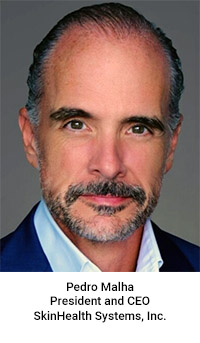
SkinHealth Systems Inc., Long Beach, Calif. [NASDAQ: SKIN], reported Q3-2026 net sales of $69.2M, down 2.1% YOY, a narrower decline than the 7.8% recorded in Q2-2026. Delivery-system revenue fell to $18.8M from $20.8M, with 798 systems placed compared with 875 a year earlier. Consumables returned to growth, rising 1.2% to $50.4M, and the active installed base reached 37,342. Gross margin increased to 68.2% from 64.6%, and adjusted EBITDA rose to $13.4M from $8.9M. The net loss narrowed to $0.9M from $11.0M. SkinHealth narrowed full-year net sales guidance to $281M to $287M and raised adjusted EBITDA guidance to $48M to $50M.
Better earnings do not yet amount to a sales recovery. Consumables improved but did not offset lower equipment revenue, and a one-time tariff refund accounted for part of the margin gain.
SkinHealth introduced a U.S. equipment rental program to lower the upfront cost for providers. For practices that already have a Hydrafacial system, the company is using new skin boosters and provider education to encourage more treatments. “The real opportunity lies in helping providers perform more treatments, increase utilization, and generate more recurring consumables revenue,” said President and CEO Pedro Malha.
Apyx Medical Corp., Clearwater, Fla. [NASDAQ: APYX], reported quarterly revenue of $14.0M, up 9% YOY. Surgical Aesthetics sales rose 17% to $13.0M, led by AYON Body Contouring System sales and higher international generator sales. Domestic standalone generator sales and global sales of single-use handpieces declined. Apyx fully launched the AYON power liposuction handpiece during the quarter. Adjusted EBITDA turned positive at $0.4M, compared with a $0.1M loss a year earlier, and net loss attributable to shareholders narrowed to $1.8M. It maintained full-year revenue guidance of $59M to $60M, including $54M to $55M in Surgical Aesthetics revenue.
On the earnings call, President and CEO Charlie Goodwin said GLP-1 adoption was “reshaping the body contouring patient population,” a shift he sees as a long-term opportunity for Apyx. The quarter showed growth in AYON and international generator sales, but Apyx did not quantify how much of that growth came from GLP-1-related demand.
Dermatological skincare continued to grow at a double-digit rate at L’Oréal S.A., Paris, France [LRLCY: US]. Its Dermatological Beauty division recorded Q3-2026 sales of €1.872B, up 15.7% reported, 13.9% like-for-like and 12.2% on an adjusted like-for-like basis that strips out timing effects from an IT transition. Over the first nine-months, La Roche-Posay, CeraVe, and SkinCeuticals each posted double-digit growth. SkinCeuticals benefited from strength in the U.S. and China, its two key markets, while CeraVe continued to grow in North America and expanded in international markets.
In breast aesthetics, Establishment Labs Holdings Inc., Alajuela, Costa Rica [NASDAQ: ESTA], reported third-quarter revenue of $72.0M, up 33.9% YOY. U.S. sales more than doubled to $26.0M, while international revenue rose 9.7% to $46.0M. Revenue from the minimally invasive platform, which includes Mia Femtech and Preservé, rose 124% to around $9M. Adjusted EBITDA climbed to $6.4M from $1.2M. The company generated $7.7M in operating cash flow and $5.1M in free cash flow, its first positive quarter on both measures. It raised full-year revenue guidance to more than $274M, from $269M to $271M.
The U.S. accounted for roughly four-fifths of the YOY sales increase despite representing just over a third of quarterly revenue. The minimally invasive business grew faster, but still accounted for only about one-eighth of sales.
“Although we are regularly adding new accounts, our focus is increasingly on utilization within our existing base,” CEO Peter Caldini said. The company ended the quarter with about 2,100 U.S. accounts and more than 400 surgeons trained on Preservé in the U.S.
Please feel free to contact us directly at: info@miinews.com
© 2026 Medical Insight, Inc.


New Technologies Reshape the Aesthetic Treatment Landscape
At ASDS 2026, Dr. Tess Mauricio explores advances in injectables and energy-based devices with representatives from Evolus, AVAVA, and Cynosure Lutronic. Discussions highlight expanding product portfolios, laser innovations that improve outcomes while reducing downtime, and growing demand for regenerative and combination treatments.
© 2026 Medical Insight, Inc.


Classys Reports Nine-Month 2026 Revenue of KRW 275.7B, Up 13% YOY
The company prepares to accelerate growth in 2027 on China entry, U.S., and Europe expansion, new product launches and direct-operations integration.
Huons Global Q3 Operating Profit Plunges 53.9% Despite Revenue Growth
Consolidated revenue for the third quarter of 2026 rose 1.7% year-over-year to ₩214.8B ($160.3M), while operating profit plunged 53.9% to ₩9.4B.
VAIM Partners With Cartessa Aesthetics to Bring Korea's Leading Biostimulator Brand to the U.S. Marketplace
Juvelook provides the professional skincare market with innovative PDLLA and hyaluronic acid technology.


Mexico Becomes the First Market Worldwide to Receive Approval for Galderma’s Restylane Shaype for Both Chin and Its First Jawline Indication
Already approved across various markets globally for the chin area, this marks Restylane Shaype’s first approval for the jawline worldwide.
Hugel Aesthetics Showcases Growing U.S. Presence, Clinical Innovation and K-Aesthetic Leadership at 2026 ASDS Annual Meeting
The company highlights Letybo, presents clinic research and engages with industry leaders through scientific data, brand activations and executive events.
Bausch Health's Aesthetic Business, Solta Medical, Surpasses 10 Million Treatments Worldwide
The portfolio milestone is further reinforced by Thermage surpassing seven million tips globally.
Plated Introduces Exosome Enhancer Daily Prep Pads
The first and only pads designed for exosome compatibility, delivering microbiome-friendly exfoliation with skin barrier support.
MRP Launches Laser System for Multiple Aesthetic Treatments
The VYDENCE ZYE Ultra combines two laser wavelengths with interchangeable handpieces for applications including hair removal, tattoo removal, and skin treatments.
FDA Clears New Trials of Platelet-Derived Growth Factor Injections for Facial Aesthetics
The studies will examine cellular changes in facial skin and the safety and efficacy of rhPDGF-BB injections for infraorbital hollowing.
PatientNow Launches AI-Powered Communications Hub + VoIP Putting Every Patient Conversation in One Place
The solution makes PatientNow the only platform that allows practices to view their phone system, customer relationship management (CRM) and artificial intelligence (AI) directly within their electronic medical record (EMR) without switching tabs.
Alpha Aesthetics Partners Launches Practice Aesthetics, a First-of-Its-Kind Clinical Education Platform
The university-based clinical education platform integrates with Alpha's growing national network of medical aesthetics practices.
Skin Quality: Looking Beyond the Surface
Galderma looks closely at skin quality - how it looks, feels and functions on a day-to-day basis.
Revance Debuts DAXXIFY Streaming TV Spot, “Relatable Moments,” Bringing Honest Aesthetics Conversations to a Wider Audience
The campaign celebrates the candid, “girl’s girl” moments that happen between women, even ones who just met
OptiMantra Launches AI Scribe, Bringing Native AI Charting to Independent Practices
AI Scribe listens to the patient visit, with the patient's consent, and drafts a structured note in the visit record, ready for the provider to review, adjust, and sign.


Global Aesthetic Market XXIII
The medical aesthetics market is settling into a slower-growth phase in 2026, with steady gains replacing the boom years’ routine double-digit expansion. Higher rates, cautious consumers and tighter practice budgets are reshaping purchasing, concentrating growth in categories that deliver predictable results and fit stricter ROI hurdles. Patients are gravitating toward smaller, repeatable treatments, while practices broaden menus to emphasize skin health, wellness, memberships and long-term maintenance.

Energy-Based Aesthetic Devices
The global EBD market entered a stronger recovery phase in 2026 following two years of difficult market conditions. Worldwide EBD revenues have rebounded from the downturn in 2024, with modest improvement in 2025 followed by stronger growth during the first half of 2026. Medical Insight, Inc., attributes the recovery to stronger patient demand and renewed equipment investment. Nevertheless, high operating and financing costs continue to temper the recovery, while intense competition additionally pressures manufacturers.

Generational Ax Market Study North America
Mature, established patients and a growing younger consumer base are shaping the U.S. medical aesthetics market. Baby Boomers and Generation X remain economically important, Millennials continue to drive growth, and Gen Z is becoming a more visible part of the patient base. This updated study explains generation alone does not determine treatment behavior. Life stage, financial circumstances, and changing attitudes toward appearance, health, and aging increasingly influence what patients seek and how they engage with the market.

Asia-Pacific Aesthetic Market Study
The Asia-Pacific (APAC) medical aesthetics market remains strong despite weaker economic conditions in China, currency pressure in Japan, and uneven consumer confidence across the region. China remains the largest market and one of the industry’s main growth engines, although expansion has slowed from the double-digit rates of the past decade. South Korea continues to lead in product development and treatment innovation. Australia, New Zealand, Japan, and Singapore remain mature markets, while Southeast Asia is producing the region’s new growth opportunities.
