

Ax Industry Unleashes AI Agents

AI Reshapes What Patients Want
Aesthetic physicians have long managed unrealistic expectations from patients influenced by celebrity images and social media. Generative AI is the latest variation. Patients can now create enhanced versions of their own faces and bring them into consultations as seemingly plausible treatment goals.
AI is also moving into aesthetic practices. Patients use it independently to research treatments and define what they want, while practices adopt AI tools to visualize outcomes, recommend services, and communicate with patients. The challenge now extends beyond managing expectations, as AI increasingly influences both sides of the aesthetic consultation.
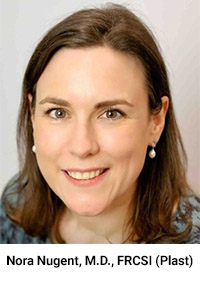
The underlying challenge is familiar, but the images patients bring through the door have changed. “We have always had patients bring in what we call ‘wish pictures’ showing what they would like to achieve,” said Nora Nugent, M.D., FRCSI (Plast), a plastic surgeon and President of the British Association of Aesthetic Plastic Surgeons (BAAPS). “In the past, that might have been a celebrity. We have also been dealing with social media filters for some time. What is changing now is that patients are putting their own photographs into AI programs, such as ChatGPT or Gemini, and asking things like, ‘Show me what I would look like after a face-lift,’ or ‘Show me 10 years younger.’”
The results vary by AI program. Some simply generate an altered image. Others add notes, such as ‘jawline tightened’ or ‘eyelids lifted.’ Others offer mild, moderate, or extreme versions, with the most dramatic results often proving unrealistic. “The important difference is that patients are now bringing in an AI-altered image of themselves rather than an image of somebody else,” added Dr. Nugent. “That changes the conversation.”
That distinction matters because the patient is no longer comparing herself with someone else’s face. The imagined result is still recognizably her own.
“Once you see an image, particularly if it is one of the first things you see while researching a procedure, it stays in your head,” Dr. Nugent said. “It becomes your first impression of what that procedure might achieve. If the image is realistic, that can be helpful. If it is not, the surgeon must walk the patient back and explain why it is not achievable. The difficulty arises when a patient assumes that if she cannot achieve the image, perhaps another surgeon can. Some patients may interpret the discussion as a limitation of the surgeon rather than a limitation of what surgery can realistically achieve. Others may feel that you are dismissing the research they have done.”
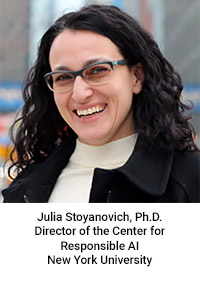
The problem goes beyond whether a surgeon can reproduce the image. Already, the AI system has decided what an “improved” version of the face should look like. “The issue as part of a larger feedback loop between algorithmic prediction and human behavior,” said Julia Stoyanovich, Ph.D., Director of the Center for Responsible AI at New York University. “A kind of regression to the mean can occur when the system embeds a specific beauty standard and then explicitly reinforces it, making people look more and more alike.”
The risk grows when training data under-represents some groups. “Another concern is identity,” she noted. “People come from different ethnic and racial backgrounds, and many people are of mixed race. In computer science, we worry about intersectional bias and discrimination because these tools can often perform worse for certain groups. We have to ask what happens when these systems are used to make appearance recommendations. Are people who are non-white or have mixed backgrounds going to be pushed toward looking more white or European? The impact may be greater for people who already look less like the faces represented in the training data. They may receive recommendations that suggest a look much more distant from their actual appearance.”
Dr. Nugent noted a similar dynamic in social media and aesthetic trends. “We have already seen this with dermal fillers,” she said. “In the U.K., over the past five to 10 years, larger lips and more prominent cheekbones have become increasingly common. For some groups, that has become the normal face. A naturally thinner lip can then look abnormal simply because people are constantly seeing celebrities, influencers, and filtered images with fuller lips and higher cheekbones.”
Repeated exposure can make an exaggerated look seem ordinary, noted Dr. Stoyanovich. “Their perception of normal changes. I think the same thing can happen with AI-generated faces. Repeated exposure to similar idealized faces can lead people to perceive those features as the new normal.”
However, AI visualization can also help when it clarifies what a patient hopes to achieve. “It is not all negative,” said Dr. Nugent. “An AI-generated image can give you a clear sense of what the patient is expecting, and then you can break the image down into different components. One part may be realistic, and another may not be. That opportunity allows you to explain what can be achieved. Take a face-lift as an example. A face-lift lifts and repositions tissue, but it does not change the surface quality of the skin. Some AI-generated facelift images also give the patient flawless skin. Change shown in the image may simply not be achievable. AI also does not account adequately for all the variables involved in actual patients, such as individual anatomy, healing, lifestyle, illness, weight gain, or weight loss.”
Patients may experiment with generative AI on their own, but aesthetic practices are also deploying AI systems. One driver is concern over how patients already use general-purpose AI to research treatments and form expectations before entering a practice.
“There is a lot of disinformation, whether that be online or beauty filters, or uploading your photo on ChatGPT and it making you look like a 10X version of yourself, which is not clinically realistic,” said Phil Sitter, CEO and Founder at RepeatMD (Houston, Texas). “I was looking back at the WebMD moment when WebMD came out. Everybody was diagnosing themselves through WebMD and what a problem that brought to physicians when people were diagnosing themselves. AI kind of rhymes with that if it’s not trained properly.”
Mr. Sitter also sees potential value in patient-facing AI when it helps consumers understand treatment options before a consultation. “Many times, patients don’t really know exactly which is the right treatment or the right skincare, or they just want more information that’s specific to the practice,” he said. “The real problem for many consumers is the massive overwhelm of, ‘I do not know what’s right for me.’ And they do not feel comfortable just barging into a medspa or a plastic surgery center and saying, ‘Hey, I have no idea. I’m kind of interested, but what do you offer?’ The goal is to lower that threshold and take patients that are interested and give them the information they need to decide.”
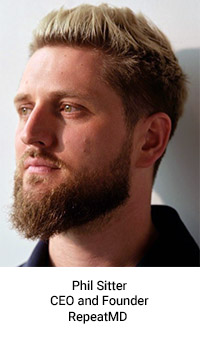
That is where patient education can blur into persuasion. “An AI recommendation can influence a consumer,” said Mr. Sitter. “Ultimately, the provider owns the clinical decision. It can help inform the patient based off questions the patient has — this laser versus that laser, this treatment versus that treatment. But when the AI advisor says, ‘this skincare over that skincare,’ there is a level of influence there. And so, it’s all about training the model, training the recommendations.”
The larger question is whether clinical expertise shapes patient-facing AI or whether the systems rely mainly on information embedded in general-purpose large language models. “How do we leverage expertise? That’s the question,” noted Mr. Sitter. “How do we take the combined hundreds of years of expertise and use that to help guide the outcome of a conversation or an image, rather than just saying, ‘These models can do a bunch of cool stuff. Let’s let them do it?’”
Dr. Stoyanovich extended that concern to the expectations these systems can create before the physician enters the conversation. “If the tool tells a patient, in effect, ‘You’re going to be very satisfied with this result,’ or shows that previous users were happier after following similar recommendations, that begins to set an expectation,” she said. “But none of that is guaranteed. It is still a depiction of a before-and-after outcome, while the surgeon ultimately must live with the consequences if the recommendation proves wrong.”
The debate ultimately comes down to who retains control. “These are tools,” said Dr. Stoyanovich. “They shouldn’t dictate to us how the world should be or what we should look like. Imagine getting into a car that could only drive 60 miles per hour or could only turn left. That’s not the car you want. You want the controls to be in your hands. For these applications, that’s especially important. People’s identities are at stake.”
As AI becomes embedded in aesthetic decision-making, the central question is no longer simply what the technology can do, but how much authority practitioners are willing to give it.
Please feel free to contact us directly at: info@miinews.com
© 2026 Medical Insight, Inc.

Industry Experts Debate the Promise and Perils of AI Agents
Michael Moretti interviewed a panel of industry experts about how AI agents are automating practice operations and streamlining manufacturers’ systems. They weighed the competitive risks of falling behind against concerns over data security, vendor reliability, and unregulated AI-driven sales tactics. The discussion also explores how AI-powered search is changing the way patients discover aesthetic providers.
© 2026 Medical Insight, Inc.
Experts Demand Stronger Evidence Behind Aesthetic Exosome Claims
Marketing of exosomes is speeding up across medical aesthetics, with promises of regenerative benefits for skin, hair, and tissue repair. Despite the surge in products and marketing claims, the FDA continues to state it has approved no exosome products. Products intended to treat disease or alter the body’s structure or function may face drug and biologic requirements, even when marketed as cosmetics.
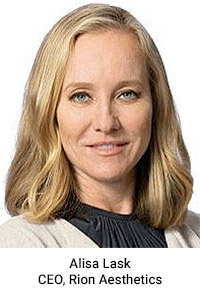
That absence of approved products makes caution especially important, according to Alisa Lask, CEO of Rion Aesthetics. “That’s why it’s so important to go through the full process and truly understand what these products are, how they’re used, and which patients they’re appropriate for before people inject exosomes off-label. To my knowledge, very few companies in the U.S. are attempting to move through the complete regulatory pathway, from preclinical work into human studies, in a standard, pharmaceutical-style development process.”
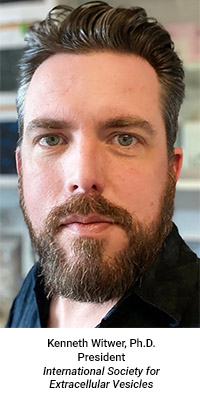
Scientists say the very definition of what qualifies as an “exosome product” is often far less clear than marketing suggests. Kenneth Witwer, Ph.D., Past President of the International Society for Extracellular Vesicles (ISEV), noted that people frequently misunderstand the term itself. “Almost any unpurified cell culture product will contain exosomes, along with other types of extracellular vesicles (EVs) and many other particle types,” he said. “You can legitimately say that almost anything contains exosomes, just like almost any product in my local grocery store contains sugar. However, marketers do not label all these products as sugar, and we should not label products with 100 ingredients as ‘exosomes’ or ‘pure exosomes.’”
ISEV’s MISEV2023 guidelines suggest using “extracellular vesicles” if researchers have not demonstrated the vesicles’ specific subcellular origin. “Exosome” identifies vesicles originating in the cell’s endosomal system; it is not a general synonym for any small particle released by a cell.
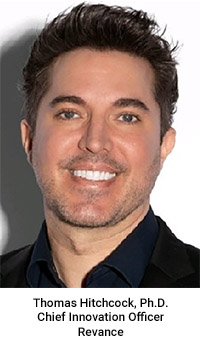
From a scientific perspective, the label itself can be misleading. “Marketers could technically label anything isolated from cells containing exosomes as such, provided stability data suggests some exosomes remain viable throughout the product’s shelf-life,” said Thomas Hitchcock, Ph.D., Chief Innovation Officer at Revance. “The more salient question is, what kind of exosomes are they and what are they going to do biologically? The market has generalized the term ‘exosomes’ as a beneficial ingredient regardless of quantity or source. This is reductive at best.”
The concept has become a powerful marketing shorthand. “It has become very nebulous with what actually qualifies as an exosome, because the term is now applying to so many things,” said Nicole Simpson, former Education & Business Development at EMA Aesthetics, Ltd. “Companies around the world are marketing products as EVs or exosomes, then loading them with peptides, vitamin C, and other ingredients and still calling the whole formulation an exosome.”
She tied that confusion to the field’s history. “When stem cells first entered the market, it was the wild, wild west. Nobody really understood what they were doing, but people believed they were working. As science developed, we understood that the functional piece, the part doing the heavy lifting, was exosomes.”
Regulatory enforcement has continued alongside the scientific debate. The FDA has issued warning letters to companies marketing unapproved biologic products, including some marketed as exosomes.
In a May 5, 2025, warning letter to Supreme Rejuvenation, LLC, the FDA said its products, including exosome gels, were unapproved drugs and unlicensed biologics. The agency cited claims involving tissue repair and regeneration and noted that no investigational new drug application was in effect for the product. An August 15, 2025, letter to Platinum Biologics LLC similarly identified NanoEx and Nano Xsomes as unapproved drugs and unlicensed biologics subject to pre-market review and approval requirements.
More recently, an August 14, 2026, warning letter to R3 Medical Companies cited unapproved drugs, unlicensed biologics, and manufacturing violations involving products that included ReBellaXO and ReBellaXOL, marketed as exosomes. The FDA cited promotional claims involving hair and facial rejuvenation and said the manufacturing process did not appear to isolate exosomes. Its findings included deficiencies in aseptic-process validation and stability testing.
One factor drawing FDA scrutiny is the number of companies that market their products by touting exosome counts. “If you walk around any aesthetic Congress, you’ll see a multitude of exosome companies,” said Malcolm Wall Morris, Co-Founder and CEO of EMA Aesthetics, Ltd. “You will hear one thing at each exhibitor stand, and that’s exosome count. Their position is justified by tens of millions, billions, and sometimes trillions, and their product is supposedly best because they claim three trillion exosomes. That’s very easy marketing.”
Dr. Witwer provided a reality check. “Any product marketed as exosomes is not pure exosomes because scientists cannot specifically separate exosomes from other EVs. Any product label that provides an exosome count or concentration — as in, ten billion exosomes or a trillion exosomes per milliliter — is misleading, as there is no way to count exosomes specifically.”
The FDA warning letters matter because they move the discussion from academic disagreement into regulatory enforcement. “But enforcement has been uneven,” said Ms. Lask. “Right now, it still feels like whack-a-mole. One company gets shut down, another pops up, or a company cleans up its website for a while and then drifts back to making the same claims. We’ve looked at products being marketed as exosomes and, many times, we can’t find exosomes at all. I think this is a tough area for the FDA to police at scale.
But as the agency uses more AI-driven tools, it should be able to monitor websites and social media much more quickly, identify the biggest violators, and move faster on enforcement. I hope that side of it will catch up.”
Intended use and promotional claims help determine a product’s regulatory category. Cosmetics seldom need FDA pre-market approval; however, regulatory authorities will classify a topical formulation as a drug if it intends to treat disease or impact the skin’s structure or function. “Regulatory bodies don’t really focus as much on less risky uses, such as topical cosmetic applications, as long as only cosmetic-type claims are made,” said Dr. Hitchcock. “However, they may quickly react to a product that is being injected or making drug-type claims, as this is much riskier and can lead to more significant safety issues.”
Companies encounter problems when marketing surpasses scientific understanding. Many use terms like “regenerative” without specifying the biological effects they claim or the evidence supporting them. “When developers use the word regenerative, my question is, what do they actually have to prove in order to use their products?” asked Ms. Lask. “Do they have to show that products are truly doing something beneficial beneath the skin? Right now, the marketing has gotten ahead of the science. The wagon is ahead of the horse, and that has to change.”
“When developers use the word regenerative, my question is, what do they actually have to prove in order to use their products?"
Clarifying terminology and sorting out claims gives physicians a clear responsibility. They need to insist on evidence, not slogans, and protect patient trust. Dr. Witwer stated, “Different countries regulate aesthetic products in different ways. In some places, there is little or no oversight. Even topical applications can have side effects, including allergic reactions. Products that are labeled as exosomes may have many, even hundreds, of chemical ingredients, any of which might contribute to reactions. Do not use topical agents by injection or other internal methods. I recently heard about a case. A physician presumably injected someone with ‘cosmetic use exosomes.’ The physician was likely unaware of the complexities of EV production, separation, characterization, and testing, and perhaps also unaware of what else might have been in the preparation.”
Our industry can’t wait for the FDA to clean up the emerging exosome sector. Scientific ambiguity, aggressive marketing, uneven enforcement, and physician confusion all point in the same direction. Companies that want this sector to survive will have to impose higher standards on themselves.
Rion Aesthetics is pursuing an injectable exosome product via formal clinical development. “We’re using the same core exosome platform in our Plated skincare line to develop a future injectable product,” said Alex Haskell, the company’s Vice President of Marketing. “This is going through much more rigorous FDA clinical trials right now. We have completed Phase I and hope to start Phase II soon.” Rion’s published pipeline currently lists Purified Exosome Product (PEP) plus saline for photodamaged skin and non-scarring alopecia at Phase 2.
The question is not whether verification is possible, but whether manufacturers are willing — or able — to do the work needed to support their claims. “It is possible to verify if a product contains functional exosomes if you have a clear picture of what the exosomes contain, what titer of each component is in them, and what each of those components do biologically,” explained Dr. Hitchcock. “The question is whether most companies have the means or the desire to do the research to determine those characteristics. Or even more so, whether their product is consistent enough in each batch to develop any sort of routine analytical tests. Many cell systems create exosomes that contain variable ‘payloads’ depending on their environment. Other systems may be more consistent as their payloads are for a stated purpose.”
Looking ahead, the path to legitimacy for EV-based therapies is already coming into view, with clear scientific and regulatory milestones that would signal the field has matured beyond hype.
“I believe that we already know what this looks like, as many pharmaceutical products have already reached regulatory engagement around the world,” stated Dr. Witwer. “Establish and test function through potency assays. Evidence-based production, separation, and characterization that will be scalable for clinical needs. Rigorous clinical trials. Whether the clinical trials work out for individual products and indications, EVs are no longer just hype. They have tremendous promise and have worked in several clinical situations.”
Ms. Lask argued that the market is unlikely to sort itself out until an approved benchmark exists. “We have to self-police and call things out for what they are. Until there’s a first FDA approval, the charlatans will continue, because patients want these products and they trust their providers, even when the product isn’t FDA approved.”
Please feel free to contact us directly at: info@miinews.com
© 2026 Medical Insight, Inc.

CorralData Acquisition Expands AI Analytics and Benchmarking for Medspa Operators
It acquired The Data Co, an analytics company built for multi-clinic aesthetics groups.
Trifecta Collective Acquires Medical Spa Show From AmSpa
Event organizer adds medical aesthetics trade show to portfolio in fifth acquisition; long-term partnership keeps AmSpa connected to show.
Aesthetic Brokers Advises SDBotox on Strategic Partnership
The company served as exclusive sell-side advisor to SDBotox in a strategic partnership. Terms of the transaction were not disclosed.
AbbVie to Host Third-Quarter 2026 Earnings Conference Call
To be held on Friday, October 30, 2026, before the market opens.
Humedix to Invest ₩3.3B in Medical Product R&D Under Government Program
The investment, which includes government funding, will support the development and commercialization of medical products using biocompatible materials and functional peptides.
Bausch Health to Announce Third Quarter 2026 Results on October 28, 2026
The company will host a live conference call and webcast at 5:00 p.m. U.S. EDT.
Classys Brings in Former Bain Partner to Overhaul Global Sales Strategy
Bae Jung-hee will oversee the company's Go-to-Market Center.

FDA Issues Letter to Evolus Over Jeuveau Social Media Promotion
The agencys Office of Prescription Drug Promotion cited an Instagram promotional reel for Jeuveau that it says was false or misleading.
MedSpa Board and QUAD A Provide Joint Guidance on IV Infusion Safety Following Recent Safety Concerns
This follows recent FDA and CDC safety communications involving compounded injectable glutathione and related adverse events.
Longevity, Safety, and Innovation with Merz Aesthetics
In this Medical Spa Insider podcast, Alex Thiersch is joined by Patrick Urban, President of Merz Aesthetics North America, and Cheryl Haseeb, DNP, FNP-BC, founder of Pura Medical Aesthetics and the Aesthetic National Institute.
Evolus Launches Wings by Evolus
A new charitable platform to mobilize its community in support of important causes.
Hydrafacial Introduces HydraClear Treatment Booster to Clarify Blemish-Prone Skin
It is designed to help clear pores, improve the appearance of congestion and visibly fade post-blemish marks, revealing clearer-looking, more balanced skin.
Establishment Labs Receives FDA Approval for Additional Sizes of Motiva Implants
The approval adds 28 new sizes to the Motiva U.S. portfolio, including implants as small as 105 cc.
Rapalogix Health Announces Publication of Double-Blind Clinical Study Showing Re-Q Longevity Face Serum Improves Skin Firmness, Elasticity, and Biomechanics
Peer-reviewed results in the Journal of Cosmetic Dermatology show significant improvements versus vehicle as early as Week 2, supported by data demonstrating TORC1 pathway suppression in human skin models.
Rubedo Life Sciences Announces Phase 1b Data Showing Reduction in Skin Epigenetic Age
Clinical and translational findings demonstrated improvements in collagen production, inflammatory signaling and molecular markers associated with cellular aging in both skin tissue and plasma.
AbbVie Unveils New Clinical and Real-World Dermatology Data at EADV 2026
The breadth of data from 60 abstracts reflects AbbVie's expanding portfolio across a wide spectrum of immune-mediated skin diseases.
SEV Laser Becomes SEV SKIN Amid Rising Demand for Aesthetic Treatments
The rebranding reflects the medspa company’s expansion beyond laser hair removal into a broader range of aesthetic treatments.
CACI Introduces Temperature-Control Technology for RF Treatments
The integrated technology works with Rejuva Med’s multipolar RF treatment.
Researchers to Test Acceptance of Autonomous AI in Facial Surgery Planning
The study will examine responsibility attribution and whether AI familiarity influences responses.
Bausch Health Announce Appointment of Thomas J. Appio as Interim Bausch + Lomb CEO
Expects to raise full-year 2026 guidance.

Global Aesthetic Market XXIII
The medical aesthetics market is settling into a slower-growth phase in 2026, with steady gains replacing the boom years’ routine double-digit expansion. Higher rates, cautious consumers and tighter practice budgets are reshaping purchasing, concentrating growth in categories that deliver predictable results and fit stricter ROI hurdles. Patients are gravitating toward smaller, repeatable treatments, while practices broaden menus to emphasize skin health, wellness, memberships and long-term maintenance.
Generational Ax Market Study North America
Mature, established patients and a growing younger consumer base are shaping the U.S. medical aesthetics market. Baby Boomers and Generation X remain economically important, Millennials continue to drive growth, and Gen Z is becoming a more visible part of the patient base. This updated study explains generation alone does not determine treatment behavior. Life stage, financial circumstances, and changing attitudes toward appearance, health, and aging increasingly influence what patients seek and how they engage with the market.
Asia-Pacific Aesthetic Market Study
The Asia-Pacific (APAC) medical aesthetics market remains strong despite weaker economic conditions in China, currency pressure in Japan, and uneven consumer confidence across the region. China remains the largest market and one of the industry’s main growth engines, although expansion has slowed from the double-digit rates of the past decade. South Korea continues to lead in product development and treatment innovation. Australia, New Zealand, Japan, and Singapore remain mature markets, while Southeast Asia is producing the region’s new growth opportunities.
Physician-Dispensed Topicals
The global PDT sector continues to grow in 2026, but the market has become more demanding than it was during the post-pandemic surge. Practices are watching inventory more closely and are less willing to carry products without a clear role in patient care. A topical now needs to do more than display a medical-grade label. It must help prepare skin before treatment, support recovery afterward, or help maintain results between office visits.
