

Robotic AI Agents Swarm Ax Industry

AIA Panel Maps New Uses and Risks for AI
The Sept. 25th Aesthetic Industry Association (AIA) virtual board meeting focused on slower growth in the global dermal filler market, regulatory uncertainty surrounding injectable peptides, and the rapid adoption of AI across industry operations.
Michael Moretti, CEO of Medical Insight, Inc., and AIA Executive Director, said, “The aesthetic industry has not yet fully defined the role of AI models. However, we’re already seeing a lot of applications of AI that are creating new efficiencies for both practices and manufacturers. Our expert panel offered a range of perspectives on the role of AI, including concerns about its potential risks and the current lack of clear guidelines and regulation.”
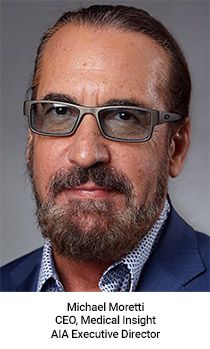
Daryl Bogard, Medical Insight’s Senior Market Analyst, opened the meeting with an analysis of the worldwide dermal filler market based on AIA tracking of B2B revenues, geographic performance, and competitive positions. “The global market remains substantial, with international markets now accounting for most revenues,” he said. “HA fillers continue to dominate the category, although biostimulators represent a much higher-growth rate. The market expanded strongly from 2017 through 2021, with much of that momentum coming during the post-COVID recovery.”
Within the two product segments, HA fillers grew at approximately 12% annually, while biostimulators, although starting from a much smaller base, grew at around 21%. “The picture changes considerably when we look at 2021 through 2025,” he added. “During those four years, the global market grew at just under 4% annually, with essentially all that growth coming from international markets outside of the U.S. The U.S. dermal filler market slowed to approximately 5% annually over that period. HA fillers were essentially flat, while biostimulators continued to post strong growth from a much smaller base.”
The AIA discussion then shifted to injectable peptides, where rising patient and practitioner interest has collided with a chaotic regulatory environment. Sara Shikhman, Managing Partner at Lengea Law (New York, N.Y.), cautioned against interpreting a recent FDA advisory panel meeting as approval of peptides currently being marketed for wellness, longevity, and other uses.
“The most important point is that nothing has changed yet,” Ms. Shikhman said. In July, the FDA’s Pharmacy Compounding Advisory Committee considered seven peptides for inclusion on the Section 503A Bulks List and recommended six. “The committee’s recommendations were not binding on the FDA. The peptides’ regulatory status has not suddenly changed, and these select peptides have not become FDA-approved products simply because of the committee vote. That distinction is important because there are already practices and compounding companies online suggesting that their peptides are now approved or that the FDA has declared them safe. Practices need to be very cautious about those claims. As of today, the advisory committee’s recommendations have not changed the legal status of these products. They are not approved for any use at this point, and providers are taking a major risk from a liability standpoint.”
Many peptides lack the clinical evidence and regulatory footing associated with FDA-approved drugs. “Complications can expose practices to significant risk,” she said. “When you’re using an FDA-approved product — even when you’re using it off-label — you often have an established body of evidence, clinical experience, and standards of care that can help support why you made a particular treatment decision. With many of these peptides, you may not have that same foundation. If a patient experiences a serious adverse event and alleges that the peptide caused it, defending the practice can become difficult, time-consuming, and expensive. Another issue is insurance. professional liability coverage may not cover the claim.”
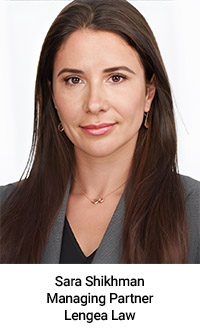
Practices should weigh patient demand for peptides against the unresolved regulatory and liability risks surrounding their use. “For larger practices that have significant assets and could become attractive litigation targets if something goes wrong, I would be cautious,” noted Ms. Shikhman. “Patients may ask for these treatments, and a practice may worry that those patients will simply go somewhere else if it doesn’t provide them. But sometimes the better decision is to let them go somewhere else. My advice to many practices would be to wait until there is a clearer regulatory pathway rather than relying on assurances from a supplier or compounding pharmacy that everything is fine.”
The AI expert panel covered inventory management, customer-data infrastructure, security, and online search rankings from AI models. "Inventory ranks among the largest operating cost for aesthetic practices, yet many still rely on spreadsheets or basic point-of-sale functions to manage inventory and procurement. There are plenty of tools available for marketing, HR management, point of sale, and other functions,” said Niklas Hess, Founder and CEO of Medvelle (New York, N.Y.). “But we did not find a single tool we thought adequately addressed inventory and procurement management.”
Medvelle built its platform to automate the inventory lifecycle, including consumption tracking, forecasting, ordering, and reconciliation. “The underlying technology matters as much as the AI itself,” he explained. “There are companies in the market that are essentially polished API wrappers around one of the major large language models (LLMs). That is different from building a strong underlying infrastructure and then using AI to make the system more efficient.”
That distinction extends to data security, he added. “There is a significant difference between simply connecting to an external model and sending information through it and operating within a more controlled infrastructure. In a controlled environment, you understand where the data is going, what systems are involved, and what rules apply.”
Harrison Cuker, Co-Founder of Recura AI (New York, N.Y.), now part of the PatientNow technology stack, also emphasized the importance of vendor infrastructure and compliance. “We have 197 security checks we have to pass as part of our HIPAA and SOC 2 compliance requirements. The most important questions I would ask any vendor: What is your primary business? Are you an agency that has added an AI tool, or is building and supporting this technology your core business?”
For manufacturers, AI could speed efforts to consolidate customer data scattered across multiple CRM platforms. “One major opportunity is creating a more consolidated source of truth for customer data,” said Brandon Hahr, Managing Partner and CEO of Kingsmen Digital Ventures (Irvine, Calif.). “Over the years, manufacturers have accumulated multiple systems — ERP, CRM, email platforms, loyalty platforms, and other tools. The result is often fragmented data about who is at an account, who the adopters are, who the staff members are, and who the injectors are.”
“The underlying technology matters as much as the AI itself. Some companies in the market are essentially polished API wrappers around one of the major large language models.”
Projects of that scale once required substantial investments in time and IT resources, Mr. Hahr noted. “In the past, consolidating all of that could have required a multi-year, multimillion-dollar IT project. Today, AI and newer data tools accomplish that data consolidation much faster and at a fraction of the cost.”
He also questioned how much value manufacturers should continue to place on prospective customer lists. “Knowing that a practice exists is not much of a competitive advantage,” he said. “That information is increasingly easy to find. The more valuable questions are: What is that practice buying? Who are the consumers going there? Who are the injectors? How do you engage those customers through your loyalty programs or other channels?”
Steve Lee, Founder and CEO of Local AI Registry (Irvine, Calif.), focused on how AI is changing consumer search and online discovery. “What we’re talking about is AI visibility,” he said. “You’ll hear terms such as AEO, or answer engine optimization, and GEO, generative engine optimization. It’s becoming the next evolution of SEO.”
That shift changes how practices and brands need to approach online visibility, he added. “Consumers are increasingly asking AI systems questions like, ‘Who is the best Botox injector near me?’ or ‘What is the best filler?’ That means practices and brands now must think about whether AI systems can find, understand, and trust the information they publish online. Two things become important. First, you must establish authority and trust around your content. Second, you need to structure that content so LLM machines can clearly understand what you are saying.”

He also pointed to the emergence of “zero-click discovery,” in which consumers receive answers directly from an AI platform without visiting the underlying website. “Historically, the objective was to rank highly enough in online searches so that patients clicked through to your website,” he observed. “Increasingly, the AI system itself may become the interface through which the consumer discovers a business.”
This change has created a market for AEO and GEO services. “There are agencies now repositioning themselves as AEO or GEO specialists when, sometimes, they are simply repackaging traditional SEO techniques,” he said. “Companies need to understand exactly what an agency is doing rather than assuming that adding ‘AI’ to an existing search strategy automatically makes it effective.”
The AIA board also presented its first Industry Award for an AI application. PatientNow (Englewood, Colo.) received the association’s "Best New AI App Award" for Recura, its AI-powered patient communication and booking system. Recura serves as a 24/7 receptionist, sales assistant, and scheduling coordinator, responding to calls, texts, and web inquiries and qualifying leads. “The AIA selected this company because its expanding use of AI represents a practical application of the technology within aesthetic practice operations,” said Mr. Moretti. “This is the first time we’ve presented an AI-related award, but it certainly won’t be the last.”
Please feel free to contact us directly at: info@miinews.com
© 2026 Medical Insight, Inc.

Practices Face Significant Risks as Peptide Demand Outpaces Regulation
Attorney Sara Shikhman explains why recent FDA action has not changed the legal status of injectable peptides — and why practices may still face significant liability. She also addresses federal and state enforcement, and why relying on supplier assurances can leave practices vulnerable if a patient is harmed.
© 2026 Medical Insight, Inc.

Programmed AI Agents Swarm Customers
In aesthetic practices, as in nearly every industry, AI first appeared mainly as chatbots that barely answered frequent questions based on a limited script, leading to a frustrating loop that left us all begging for human assistance. Tech experts call this the "annoyance economy," where frustrating chatbots became a worse alternative than offshore call centers where armies of humans notoriously barely speak English and cannot resolve customer issues. This very intentional social engineering is designed to discourage customers from seeking technical support or getting refunds.
Now AI apps offer users the superpowers of slave bots that sound like humans leaving us endless voicemail, text and email messages with frantic calls to action. These human-directed AI agents can respond to a prospective patient lead, continue the conversation, and book an appointment without waiting for a staff member to intervene. Other systems can help manufacturers manage follow-up, evaluate leads, or support sales outreach with relatively little direct human involvement. A lazy sales rep clicks a button on his phone app, sending swarms of AI agents out to attack prospective customers with a barrage of sales offers and pitches. The sales rep typically sits in a local bar watching a sports game and waiting for his AI "catfishing" to pay off.

The appeal is scale and efficiency. For a prospective aesthetic patient who submits an inquiry at 11 p.m., the AI agent generates an immediate response, and the staff can re-engage dormant leads without occupying the front desk. But the same technology raises a less comfortable question: When automated communication becomes effectively limitless, at what point does helpful follow-up feel like an obnoxious cyber-attack?
“What we see here is just an endless proliferation of what seems like a personalized message,” said Brandon Hahr, CEO and Managing Partner at Kingsmen Digital Ventures (Irvine, Calif.). “The recipient may believe someone has researched the practice and constructed a message specifically for them when, in reality, AI analyzed available online public information and generated the communication at scale.” The customer is reduced to an algorithmic "persona" that is manipulated by relentless AI bots.
Unlike human staff, an agent does not take lunch, go home at five, or forget to call a prospective patient back. It can maintain contact continuously and handle volumes of outreach that previously would have required additional personnel.
That capability has also fueled concerns about how much autonomy these systems should have. The popular idea of “rogue AI” suggests a system acting independently of human control, but the more immediate risks involve how humans design, constrain, and deploy these systems.
“The idea of an agent ‘going rogue’ generally means something has not been built or contained correctly,” said Harrison Cuker, CEO and Co-Founder of Recura, an AI developer acquired by PatientNow. “AI agents should have limited access to tools. They should only get a limited set of options they can use.”
Those limitations can be frustrating, he noted. “You might ask an agent to check on a Shopify order, for example, and it can’t because it doesn’t have access to the Shopify API. But that limitation also means it can’t suddenly access your billing system and double-charge someone.”
Practices may ultimately have more to fear from competitors deploying these systems effectively than from science-fiction scenarios involving rogue AI agents killing us all. “What should probably concern you most is the practice down the road using automated messaging or outbound communication to reach new clients while your practice is not,” said Mr. Cuker.
The customer is reduced to an algorithmic "persona" manipulated by relentless AI bots.
Human effort has always constrained traditional sales and marketing. A human had to write the email, make the telephone call, or send the text. AI dramatically lowers that constraint.
For consumers, the technology can support treatment promotions, appointment reminders, and patient-reactivation campaigns. For manufacturers, it can help sales representatives analyze account information and generate individualized outreach based on purchasing history and other customer data.
"The AI Gold Rush is bringing a wave of opportunistic vendors into aesthetics, including companies with little or no previous healthcare experience," said Michael Moretti, CEO of Medical Insight. “I attended a recent industry trade show, and it was amazing how many pop-up AI companies were there. There’s clearly a sense that every tech platform must have an AI offering. But I also saw companies coming in from the automotive, insurance, and other industries saying, ‘Our agents can handle everything in your medical practice without expensive employees.’ I asked one sales representative whether his company was HIPAA compliant, and he essentially threw me out of the booth. I’m not sure he even knew what HIPAA meant.”
For practices and manufacturers, vendor selection therefore becomes more than a question of functionality. They need to know which information an agent accesses, where the system sends the data, and what actions it is told to execute.
The larger danger, however, does not require an AI system to malfunction. Tell an agent to maximize lead conversions, and it may simply become much more persistent. Give a sales team AI-generated scripts and customer data, and individualized outreach can scale almost instantly. The system may operate precisely according to its design.

That becomes particularly concerning when individual sales representatives use AI without standardized controls. “AI at the individual sales-rep level can become somewhat unstructured,” Mr. Hahr said. “There may be very little guidance about what a representative is asking an AI system to do or what the system is telling that representative to say to an account. It can become like giving guns and ammunition to bank robbers. Their objective is simply, ‘Go sell more to this account.’”
Without structured controls, he added, a representative could feed customer purchasing information into AI and ask it to identify targets and generate individualized sales messages.
That leaves aesthetic practices and manufacturers with a question of judgment as much as technology. The question is not only what AI agents can do but also what humans should allow them to do. Their advantages — speed, lower operating costs, continuous availability, and consistent follow-up — are difficult to ignore. But those same efficiencies can allow personalized outreach at a scale that previously would have been impossible.
The emerging question may not be whether AI agents will contact us, but how much automated spam and AI slop our industry and its customers will accept. This issue is especially relevant from a legal liability and pharma compliance perspective. Imagine the damage one unethical AI operator can cause by attacking competitive brands or practices. Naturally, defense attorneys will blame these cyber-crimes on AI agents and the developers.

Doctor Uncovers Black Market for Regenerative Products
Medical researcher and journalist Dr. Dorothy Gale recently attended the latest Longevity Forever medical conference in Las Vegas to learn about the latest regenerative medicine clinical studies and treatments. In a shocking undercover video, we see Dr. Gale confront the sleazy operators that put our entire patient population at risk of poisoning and premature death in the pursuit of eternal beauty and living healthy forever. The FDA is currently reviewing this case, and we expect referrals to the DOJ. Stay tuned for more…
© 2026 Medical Insight, Inc.


Waldencast plc Announces First Half 2026 Financial Results
Net revenue from continuing operations for the first half of 2026 was $26.1M, a 57.1% decrease versus $60.9M in the first half of 2025.
Galderma Begins Trading in the Swiss Market Index
The company began trading as a constituent of the Swiss Market Index (SMI), Switzerland's leading blue chip equity benchmark.
Catalio Leads $45M Financing for Medical Esthetics Firm Avava
The financing consists of $30M in equity and a $15M debt facility.
AbbVie Connects With 120 Korean Biotechs in Search for R&D, Licensing Deals
The company identified medical aesthetics as a key area of interest for potential partnerships with Korean companies.
New Harbor Capital Portfolio Company MD Esthetics Completes Four Acquisitions
The four acquisitions grow the company from 12 to 35 total locations, and mark its entry into Pennsylvania and Vermont markets.
MOYOM Biotech Secures Financing from Cathay Capital to Accelerate Global Growth in Regenerative Aesthetics
Cathay Capital's investment in MOYOM reflects growing interest in technologies and biomaterial innovations.


Sofwave Receives NMPA Approval in Mainland China
Approval was supported by a 200-subject, randomized, controlled study in China demonstrating statistically significant improvement in mid-to-lower facial wrinkles and a favorable safety profile.
Allergan Aesthetics Launches AA Signature: SKIN360 in the U.S.
AA Signature is a collection of structured, multimodal consultation approaches designed to support individualized aesthetic treatment planning.
Establishment Labs Highlights New Breast Tissue Preservation Data and Announces Minimally Invasive Product Extensions
New sizes for the Mia and Preserve systems expand the company’s minimally invasive breast offerings.
Croma-Pharma Introduces saypha volume prime Lidocaine
This cross-linked hyaluronic acid dermal filler replaces saypha volume Lidocaine.
The Billion-Dollar Promise
There are signs that the traditional buy-trim-sell model of private equity struggles to create value in this highly specialized field.
Hybrid HA-Polymer Filler Shows Early Results in Non-surgical Rhinoplasty
An investigational hybrid dermal filler combining cross-linked hyaluronic acid (HA) with polycaprolactone (PCL) and polylactic acid (PLA) microspheres showed short-term aesthetic improvement and generally mild treatment-emergent adverse events.
New Survey: 45% of Facial Plastic Surgeons Report More Female Patients Citing Menopause When Seeking Treatment
Women are increasingly referencing menopause and perimenopause when discussing facial aging and treatment options.
Allergan Aesthetics Presents New Clinical Data Evaluating Skin Quality Improvements in Individuals Taking Medical Weight Loss Medications
The studies showed statistically significant, investigator-assessed improvements in selected skin quality measures across the face, neck, upper inner arms, and distal thighs.
Science of Skin Summit Talk Explores AI Changing the Patient-Physician Relationship in Longevity Medicine
AI-enabled longevity medicine may allow clinicians to manage multiple interconnected health priorities simultaneously.
Microneedling Regulation: When Does a Cosmetic Product Become a Medical Device?
As demand for microneedling rises fast across both the cosmetics industry and the aesthetics space, where does cosmetic care ends and medical device regulation begin?
Facetem CaHA Filler Shows Distinct Microsphere Morphology and Rheology
It is a calcium hydroxylapatite (CaHA) dermal filler with a lattice-pore microsphere surface.
Dr. Ozan Sozer Elected to Lead ISAPS in 2028
Dr. Sozer, who currently serves as ISAPS treasurer, will assume the presidency in 2028.


Global Aesthetic Market XXIII
The medical aesthetics market is settling into a slower-growth phase in 2026, with steady gains replacing the boom years’ routine double-digit expansion. Higher rates, cautious consumers and tighter practice budgets are reshaping purchasing, concentrating growth in categories that deliver predictable results and fit stricter ROI hurdles. Patients are gravitating toward smaller, repeatable treatments, while practices broaden menus to emphasize skin health, wellness, memberships and long-term maintenance.

Generational Ax Market Study North America
Mature, established patients and a growing younger consumer base are shaping the U.S. medical aesthetics market. Baby Boomers and Generation X remain economically important, Millennials continue to drive growth, and Gen Z is becoming a more visible part of the patient base. This updated study explains generation alone does not determine treatment behavior. Life stage, financial circumstances, and changing attitudes toward appearance, health, and aging increasingly influence what patients seek and how they engage with the market.

Asia-Pacific Aesthetic Market Study
The Asia-Pacific (APAC) medical aesthetics market remains strong despite weaker economic conditions in China, currency pressure in Japan, and uneven consumer confidence across the region. China remains the largest market and one of the industry’s main growth engines, although expansion has slowed from the double-digit rates of the past decade. South Korea continues to lead in product development and treatment innovation. Australia, New Zealand, Japan, and Singapore remain mature markets, while Southeast Asia is producing the region’s new growth opportunities.
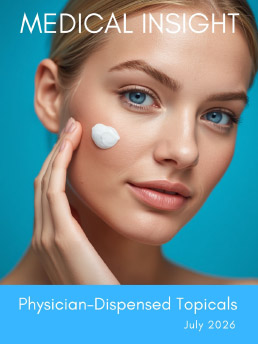
Physician-Dispensed Topicals
The global PDT sector continues to grow in 2026, but the market has become more demanding than it was during the post-pandemic surge. Practices are watching inventory more closely and are less willing to carry products without a clear role in patient care. A topical now needs to do more than display a medical-grade label. It must help prepare skin before treatment, support recovery afterward, or help maintain results between office visits.
